

Changing your watch strap is one of the easiest ways to transform how a watch looks and feels on the wrist. The same watch can go from sporty to dressy, understated to colorful, or even become better suited to a particular season or activity with a simple strap change.
But with so many types of watch straps out there, choosing the right one isn’t always as straightforward as it seems. Here are three simple rules to keep in mind when picking your next strap.
Key Takeaways
Here’s the short version before you start swapping straps:
- Choose a strap material that suits how and where you actually wear the watch.
- Match the strap’s style and width to the watch, starting with the lug width.
- Experiment with color, texture, and unexpected pairings once the basics are right.
Rule #1: Material Matters
The first thing to consider is where and how you’re actually going to wear your watch.
Take a dive watch, for instance. Can you wear a dive watch on a leather strap? Of course. Though considered a controversial pairing, it can look great. But if you’re actually planning on taking that watch swimming, a leather watch strap probably isn’t the best choice. Regular exposure to water, sweat, and heat can shorten the life of leather considerably.
That’s where different watch strap materials come into play. A rubber watch strap is an obvious choice for swimming, sports, and hot weather because it’s durable, easy to clean, and water resistant. Waterproof watch bands are also a practical option if you wear your watch for sports and outdoor activities.
A sailcloth watch strap gives you another sporty option, particularly if you want something with more texture than rubber. Nylon watch bands are similarly versatile, lightweight, and well suited to casual watches.

So, should you choose a leather or rubber watch strap?
Neither material is inherently better. When comparing a rubber vs leather watch strap, think about how you plan to use the watch. The best watch strap material is the one that makes sense for what you’ll actually be doing while wearing it.
Rule #2: Style Matters
Not every strap works equally well with every watch.
A chronograph is a natural match for a rally watch strap, with its perforated design playing into the motorsport history behind many chronographs. On a dress watch, a slim tapered watch strap keeps things elegant and proportional.
A field watch can handle a more rugged watch strap, whether that’s textured leather, canvas, or sailcloth. Dive watches pair well with rubber, sailcloth, and metal straps. And if you have a GADA (Go Anywhere, Do Anything) or sport-type watch, like a Rolex Oyster Perpetual or Omega Aqua Terra, it can pair with almost anything.
These aren’t hard watch-wearing rules, but they’re useful starting points. Looking at traditional watch strap styles can help you figure out what complements the watch rather than competes with it.
Proportions matter too. If you’re wondering how to choose watch strap size, start with the lug width of your watch. Measure the space between the inside of the lugs in millimeters and choose a strap of the corresponding width. From there, consider the thickness and taper of the strap relative to the size and style of the watch.
Dial color is another thing to consider when choosing a strap. Neutral dials like black, white, and silver give you plenty of flexibility, while colorful dials can take a little more thought. You can match your strap to the dial, choose a complementary color, or pick up a smaller detail like the hands, indices, or other accents. The goal isn’t necessarily to match perfectly, but to choose colors that look like they belong together.
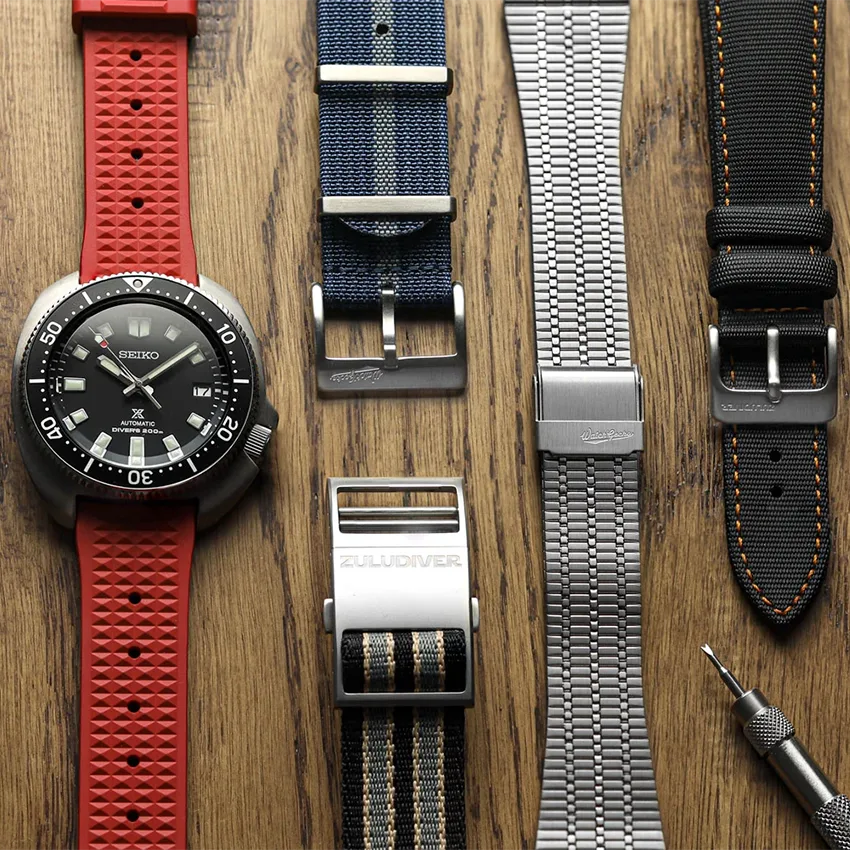
Learning how to choose a watch strap is ultimately about looking at the watch as a whole. The case, dial, strap, and even buckle should feel like they belong together.
Rule #3: Take Risks
Once you’ve got the material and general style right, you can have some fun with it.
You don’t need a loud or unusual watch to make your collection interesting. In fact, some of the best watch strap ideas start with a relatively simple watch. A new color, texture, or material can completely change its personality.
Try a green or orange rubber strap on a black-dial dive watch. Put suede on a watch that normally lives on a bracelet. Experiment with contrasting stitching or a textured rubber strap. Match your strap color to a subtle accent on the watch. Unique watch straps are an easy way to make a familiar watch feel different without changing the watch itself.
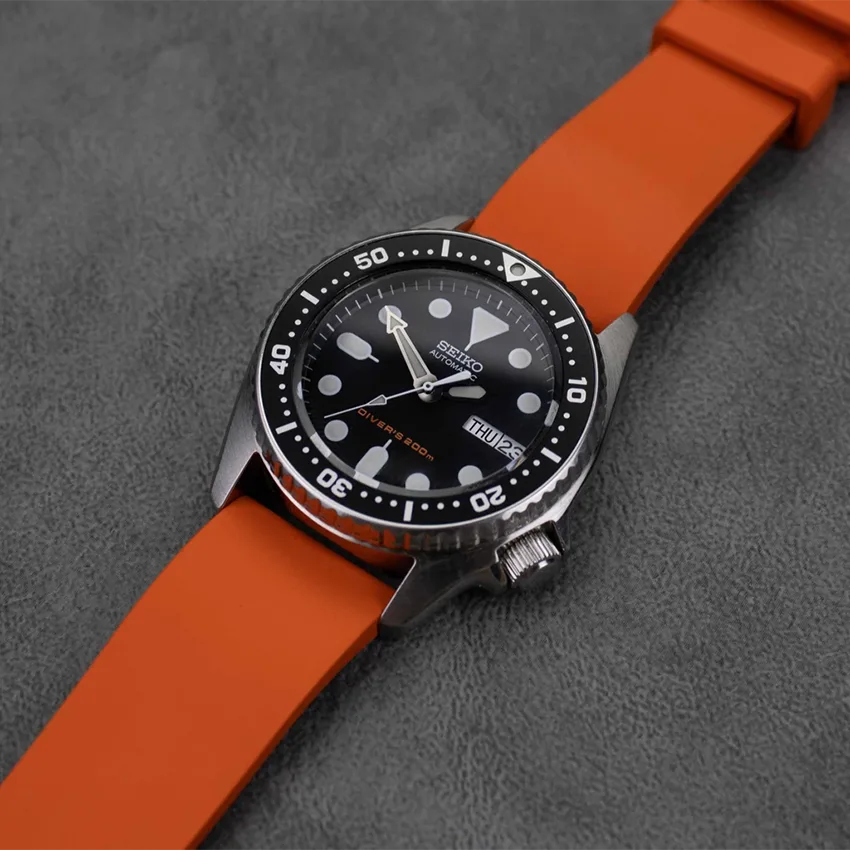
If you’re figuring out how to style a watch, don’t assume there’s only one correct combination. Start with the traditional pairings, then experiment from there. Sometimes the combinations that shouldn’t work on paper end up looking surprisingly good on the wrist.
And if you have a watch you haven’t been wearing lately, a new strap might be all you need to bring an old favorite back into your regular rotation.
The Bottom Line
Longtime collectors know there aren’t many hard rules for watch straps. Choose a material that suits how you wear the watch, pick a style that works with its design, and then don’t be afraid to experiment.
After all, changing straps is part of the fun of owning watches. One watch can take on completely different personalities depending on what you pair it with, so try a few combinations and see what works on your wrist.
When you’re ready to try something different, it’s worth browsing a full strap collection to find the right material, color, and length for each watch in your rotation.
And let us know, what’s your favorite outside-the-box watch strap combo?