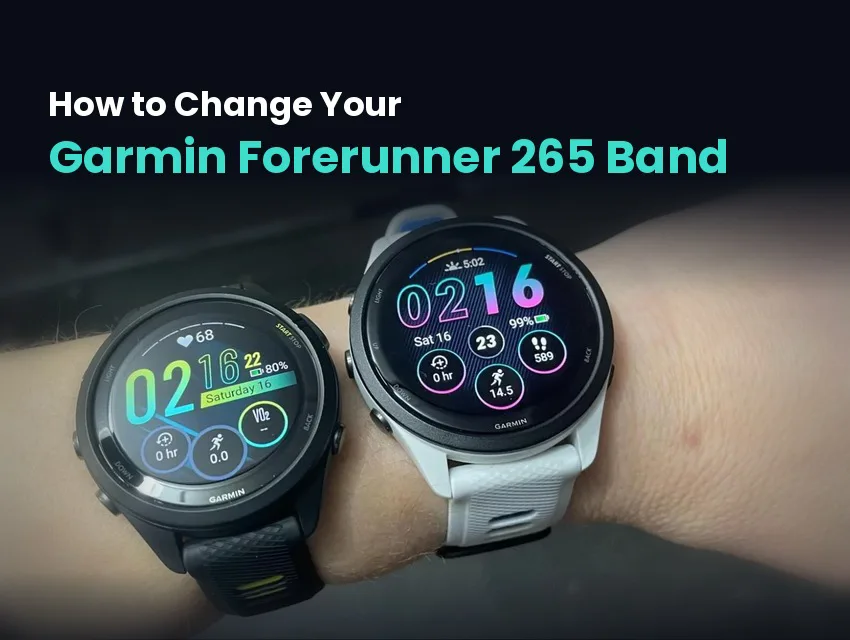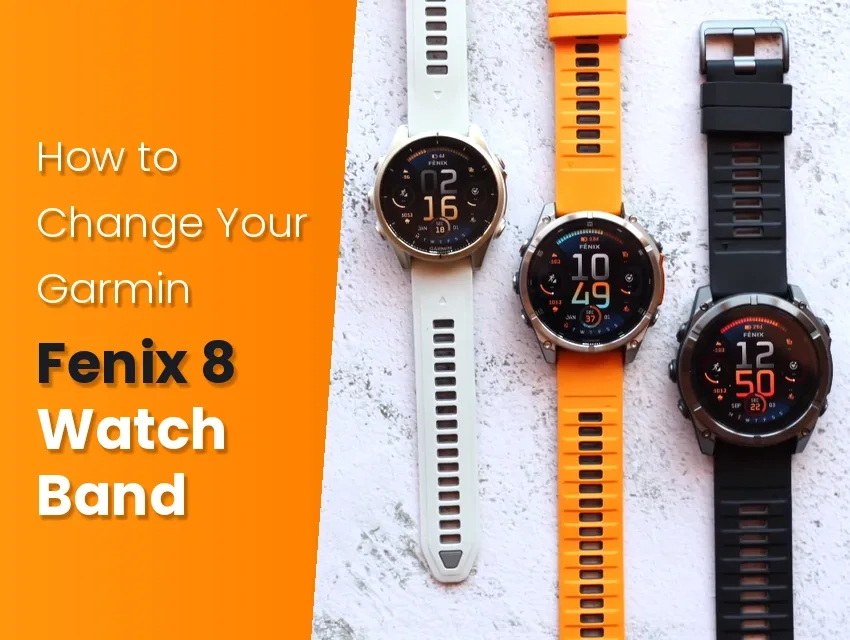
Your Garmin may look at home on a trail run, but pull on a blazer and that rubber sport band suddenly looks out of place. A leather band can fix that in seconds and turn a fitness watch into something you can wear to the office or to dinner.
This guide covers the leather styles you can pick from, which bands fit your model, and the care routine that will keep your leather band looking fresh.
Key Takeaways
- Leather is best for casual office wear and going out, not for heavy sweat, swimming, or hard training.
- QuickFit leather comes in 20mm, 22mm, and 26mm and snaps onto Fenix, Epix, Enduro, and MARQ.
- Spring-bar models like Instinct and Vivoactive take a standard leather band, not a QuickFit one.
- Sweat and water are what wear leather bands down, so a daily wipe and regular conditioning keep them going.
Garmin Leather Bands at a Glance
Leather works well on a Garmin, but only for the right moments. It works well in-office and for a casual everyday look, but it’s a poor choice for heavy sweat, swimming, or hard training.
| Use Case | Leather | Rubber Sport Band |
|---|---|---|
| Office, dinner, travel | Best look; dresses the watch up | Reads casual or athletic |
| Daily desk wear | Comfortable; develops a patina | Fine, but plain |
| Running, gym, heavy sweat | Absorbs sweat, breaks down faster | Rinses clean, built for it |
| Swimming or showering | Avoid; water ruins leather | Safe, made for water |
Overall, sports bands made of material like nylon and silicone are easier to clean, and can withstand the wear of a heavily active lifestyle. But that doesn’t mean you need to compromise your everyday style.

Leather delivers a dressed-up, elevated look. Some leather watch straps even bond leather over a silicone base to add water tolerance for those who work out casually. However, even those water-resistant leather bands are built to dodge water, not live in it.
Leather Styles for Garmin Watches
Leather is versatile and there are various looks to choose from. Two things set the options apart: the grade of the leather, which drives how it ages and what it costs, and the finish and construction, which includes the stitching, texture, and hardware that decide how dressy or rugged it reads.
You’ve got a few families to choose from, and each one suits a different watch and a different vibe.
Leather Grades
Not all leather is equal, and the grade is where the price and the lifespan come from. From best to basic:
- Full-grain: Keeps the hide’s natural surface intact. It’s the strongest, ages the best, and develops a patina over years. It’s also the priciest.
- Top-grain: Full-grain that’s been sanded smooth to even out flaws. A touch thinner and more uniform, it’s the sweet spot for most dress straps.
- Split-grain: Comes from the softer lower layers of the hide, split off and finished with a coating. More affordable, but less hard-wearing.
- Genuine leather: Real leather at an approachable price, a solid entry point for the leather look.
- Bonded leather: Leftover scraps ground up and glued to a backing, most affordable, but the least durable.

Finishing and Construction
Smooth Leather
This is the classic dress look, clean and simple. It develops a patina as it wears, so it picks up character over time. Brown, black, and tan are the common colors, and are easy to pair with most outfits.

Padded and Stitched Leather
Thicker leather with contrast stitching reads more rugged than dressy. It bulks up the wrist a little, which can suit the larger Garmin cases, like Fenix and Epix, better than a slim band would.

Leather Over a Silicone Base
Here the leather top sits on a silicone backing. That mix handles sweat better than plain leather, though it’s still not a swim band. It’s a smart pick if you want the leather look with a bit more water-resistance.

Embossed Leather
Embossed leather is stamped with a texture, often the scales of lizard, alligator, or crocodile, pressed into more affordable leather. You get the exotic look for a fraction of what real exotic skins cost, so it’s an easy way to add personality without a luxury price tag.

A Note on Hardware
It’s crucial to pick a strap that has hardware that will last. StrapsCo leather bands use a buckle made from solid 316L stainless steel with a professional finish and a solid milled tongue. That’s the same grade of steel you’ll find on higher-priced straps, so the part that takes daily strain holds up.
QuickFit and Quick-Release Compatibility
Not every Garmin attaches a band the same way, and this is where buyers order the wrong thing. Get the connector right first, then pick your style.
Garmin splits into two camps. Some models use Garmin’s own QuickFit connector, and the rest use standard quick-release spring bars. Sort out which Garmin you own before you buy a new strap.
QuickFit Models
QuickFit leather comes in three sizes: 20mm, 22mm, and 26mm. It snaps onto QuickFit-compatible models like the Fenix, Epix, Enduro, and MARQ lines with no tools, so you can install QuickFit straps in seconds. Check the listing for your watch, and confirm the exact model list against Garmin’s compatibility notes if you’re unsure.
Quick-Release Models
Garmin models like the Instinct and Vivoactive lines use standard quick-release spring bars, as do the Forerunners, including flagships like the 955, 965, and 970. Like classic watches, the sizing depends on the lug width of your device. These straps can be switched out in under a minute simply by sliding the lever.

When Leather Works on a Garmin, and When It Fails
Leather can be an excellent option for your Garmin device, but it heavily depends on your lifestyle and where you wear your watch.
Wear leather for:
- Office days, dinners, and travel, anywhere the watch needs to dress up
- Low-sweat daily wear
Skip leather for:
- Running, the gym, and any heavy-sweat session
- Swimming, showering, and water sports
The common thread is moisture. Leather is a natural material, so it drinks up sweat and water and breaks down from the inside as it dries out. That’s why even the best-looking band won’t go the distance if it lives on your wrist through every workout. It’s built for the desk and the dinner table, not the gym.
Luckily, it’s easy to swap out your watch strap depending on your daily activities.
When to Swap Leather for a Sport Band
The most comfortable band for you is the one that best suits your lifestyle and activities.
You don’t have to choose between looks and performance. Garmin watch straps are easily interchangeable whether they use QuickFit connectors or a standard quick-release spring bar. Swap straps in seconds, with no tools needed: wear leather off-duty, then snap on a sport band when you train.

You can utilize a two-band system, leather or metal straps for the office, a DuraFlex FKM or nylon band for the gym. Both can be swapped in seconds, no tools required.
How to Care for a Garmin Leather Band
Leather watch bands last a long time on a Garmin if you give them a little attention. Skip the care, and they can dry out, crack, and start to smell. The routine below keeps them looking sharp.
There are a few basic steps that you can take to keep your watch strap looking good.
- Wipe the leather dry after any sweat, before it soaks in.
- Let it air out between wears, and never store it somewhere damp or hot.
- Every month or two, or whenever it starts to feel dry, remove the strap and properly clean and condition the leather so it stays supple instead of drying and cracking.
- Rotate to a sport band on heavy days so the leather gets to rest.

The single biggest thing you can do is keep leather out of water, since water is what breaks it down fastest.
Final Thoughts
A leather band is one of the easiest ways to make a Garmin feel like more than a training tool. The same watch that tracks your intervals in the morning can look right at a dinner reservation that night, and the swap takes seconds. That versatility is the whole point: you’re not buying a dress watch and a sports watch, you’re giving one watch two lives.
The trade-off is care, and it’s a small one. A wipe after sweat, a condition every month or two, and a sport band for your hard days will keep leather looking sharp for years. Match the band to the moment, keep it out of the pool, and it’ll reward you with a patina that a rubber strap never develops.
So, what’s your split: one watch that does it all with a quick strap swap, or a dedicated watch for every occasion? Tell us in the comments.
Frequently Asked Questions
Can you wear a Garmin leather band while running or working out?
You can, but it’s not a good idea. Sweat soaks into leather and breaks it down from the inside, so a band worn through hard workouts wears out fast. Leather is built for the office and everyday wear. For running and the gym, swap to a DuraFlex FKM or nylon band that can rinse clean in seconds.
Which Garmin watches fit a QuickFit leather band?
QuickFit leather comes in 20mm, 22mm, and 26mm and fits QuickFit-compatible models like the Fenix, Epix, Enduro, and MARQ lines. It snaps on with no tools. Spring-bar watches like the Instinct and Vivoactive don’t use QuickFit, so those take a standard leather band in the right lug width instead. Forerunners are spring-bar too, including flagships like the 965, so they use a standard band rather than QuickFit.
How do you clean and condition a leather Garmin band?
Wipe the leather dry after any sweat so it doesn’t soak in, and let the band air out between wears. Condition it every month or two to keep it supple and stop it cracking. Keep it away from water, which breaks leather down fastest. On heavy workout days, rotate to a sport band so the leather gets a rest.
How long does a leather Garmin band last with daily wear?
It depends on how you treat it. Kept off your wrist during workouts and conditioned now and then, a leather band lasts a long time and ages nicely. Worn through daily sweat and never cared for, it can dry out and crack within months. The two-band system, leather for dress and sport for training, gives you the most life.