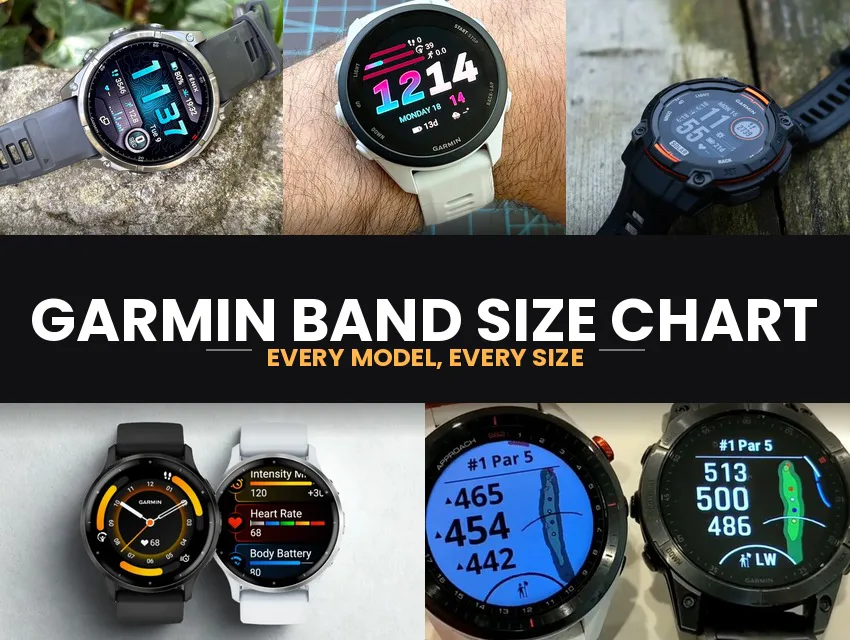
While some Garmin watch owners change the stock strap for a new look, many replace their watch strap because the original band starts wearing down, trapping sweat, irritating skin, or feeling rough during long wear sessions.
Garmin band irritation is one of the most common complaints across Garmin forums, especially among runners and all-day wearers.
The most comfortable Garmin watch strap material for you is going to depend on your lifestyle and needs. Silicone, FKM rubber, and nylon all handle sweat, heat, friction, and long training sessions differently.
Key Takeaways
- Irritation is caused by moisture getting trapped beneath the watch band, accentuated by keeper loop and pin-hole pressure.
- Silicone straps trap sweat against the skin and are the most common source of Garmin band irritation.
- FKM rubber handles sweat, sunscreen, chlorine, and UV exposure better than standard silicone because it is lower friction and sheds moisture more easily, which makes it a stronger pick for daily training.
- FKM and silicone are naturally skin-friendly materials. Most discomfort comes from trapped moisture and friction, not the material itself.
- Nylon is the most breathable Garmin strap material, but it absorbs water and dries slowly.
- For all-day wear and sleep tracking, thinner nylon or FKM bands usually create less wrist pressure during long wear sessions.
Why Straps Become Uncomfortable
Most original equipment manufacturer (OEM) Garmin silicone straps are non-porous. Sweat has nowhere to go, so moisture gets trapped between the band and your skin, particularly around the edges and under the keeper loop.
That trapped moisture, combined with friction, is why many Garmin users start noticing irritation during workouts or all-day wear.
In most cases, the problem is poor ventilation, not a reaction to the material itself.
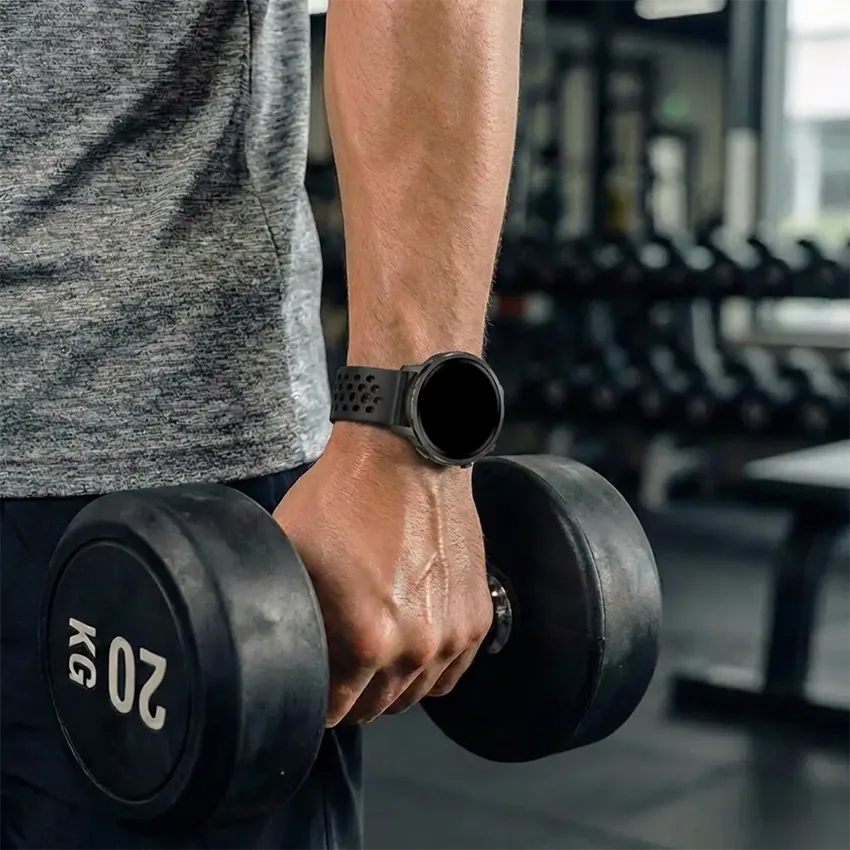
Daily wear also changes how materials, like silicone, feel over time. The pin holes are usually the first area that starts wearing down.
Sweat Trapping and Skin Contact
Rubber watch bands have a closed surface with very little airflow between the strap and your skin.
During runs, gym sessions, or hot-weather wear, sweat usually builds up fastest around the band edges and beneath the keeper loop.
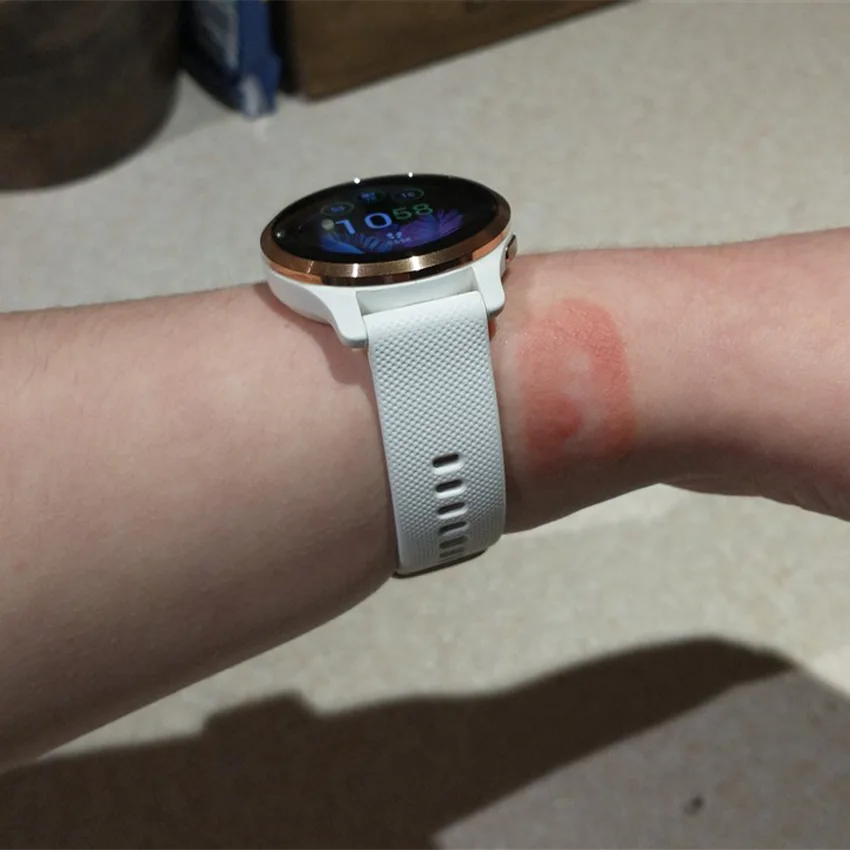
When sweat or moisture builds up under the strap and continuously rubs against your skin, the friction can cause irritation like redness, itching, and dryness.
Keeper Loop and Pin-Hole Pressure
The keeper loop keeps the strap tail flat against your wrist, but it also creates constant pressure in one narrow contact area.
On most stock Garmin straps, the keeper loop sits in one fixed spot and doesn’t flex much with your wrist. Combined with worn pin holes, that area often becomes the highest-friction point on the strap.
If irritation keeps showing up in one exact spot, the keeper loop is usually the problem rather than the entire band surface.
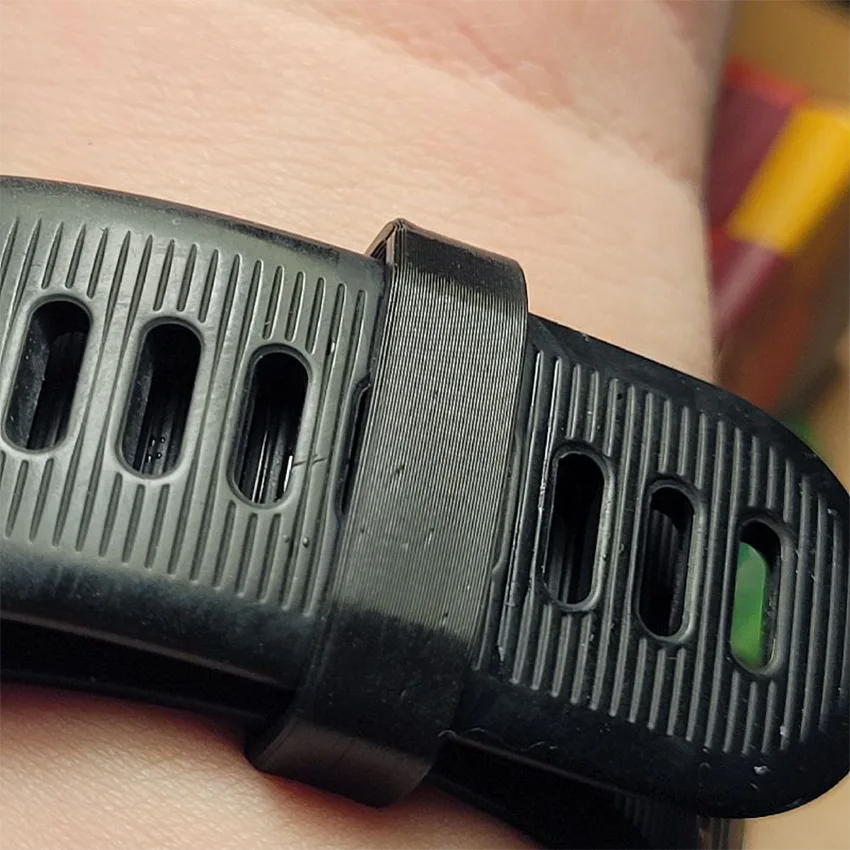
Strap length matters here as well. A band that’s slightly too short concentrates more pressure around the keeper loop and pin holes, especially during workouts when wrist size fluctuates due to fluid shifts, as well as increased blood flow and body temperature.
Silicone Garmin Watch Straps
The majority of Garmin watches, like the Fenix 8, Forerunner 265, Venu 3, and Vivoactive 5, come equipped with a silicone sport band out of the box. This band is the default choice for many people for a few reasons.
Silicone watch straps are generally the most comfortable Garmin watch strap right away, and they don’t need to be worn in.
They also cost less than higher-performance materials like FKM rubber. For casual Garmin users doing a few workouts each week, silicone still works perfectly well. The biggest mistake is keeping the same strap long after the high-friction areas start wearing down.
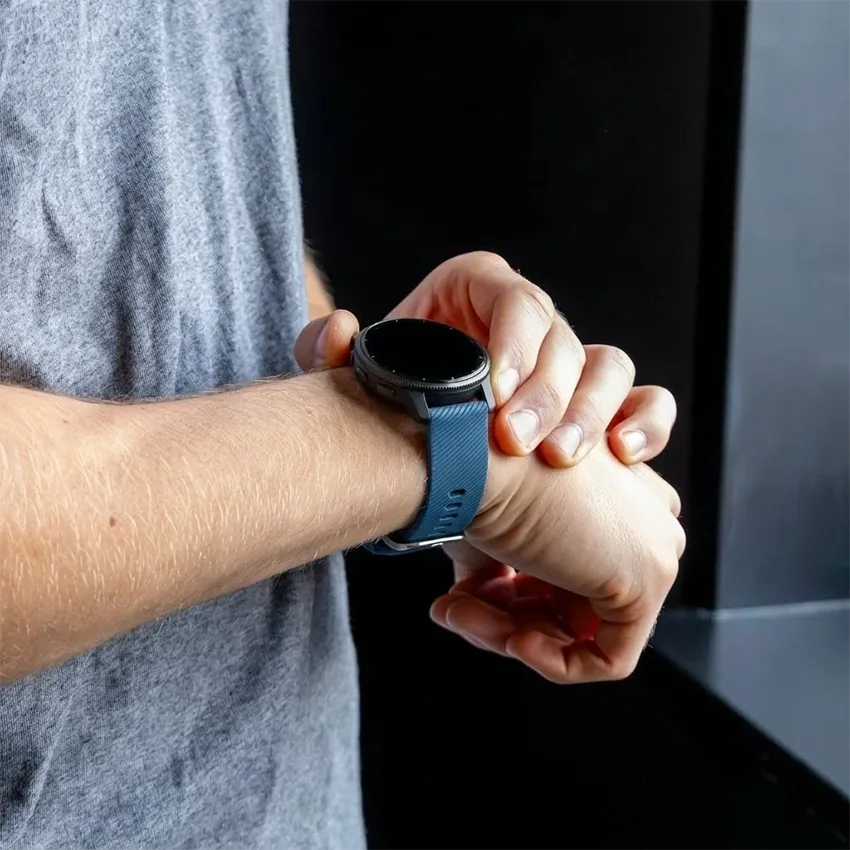
If you wear your Garmin daily, replacing a worn silicone strap before the pin holes start cracking makes a noticeable difference in comfort.
DuraFlex FKM Rubber Garmin Watch Straps
DuraFlex FKM is StrapsCo’s most durable rubber material. Fluoroelastomer (FKM) is a high-performing synthetic rubber that is more durable than silicone. The FKM rubber smart watch straps have a higher price tag than silicone watch bands but are more resistant to temperature changes, UV, and water.
Where FKM Performs Better
FKM handles the conditions Garmin owners actually train in: long trail runs, sunscreen exposure, chlorinated pool sessions, and daily sweat. Silicone usually wears faster under those conditions, mostly around the pin holes and the keeper loop.
FKM keeps its texture and flexibility longer while resisting the dusty, tacky feel that older silicone bands often develop.
Unlike silicone, synthetic FKM rubber usually feels firmer out of the box. After a couple of weeks of wear, most FKM straps soften slightly while still maintaining a cleaner feel than aging silicone.
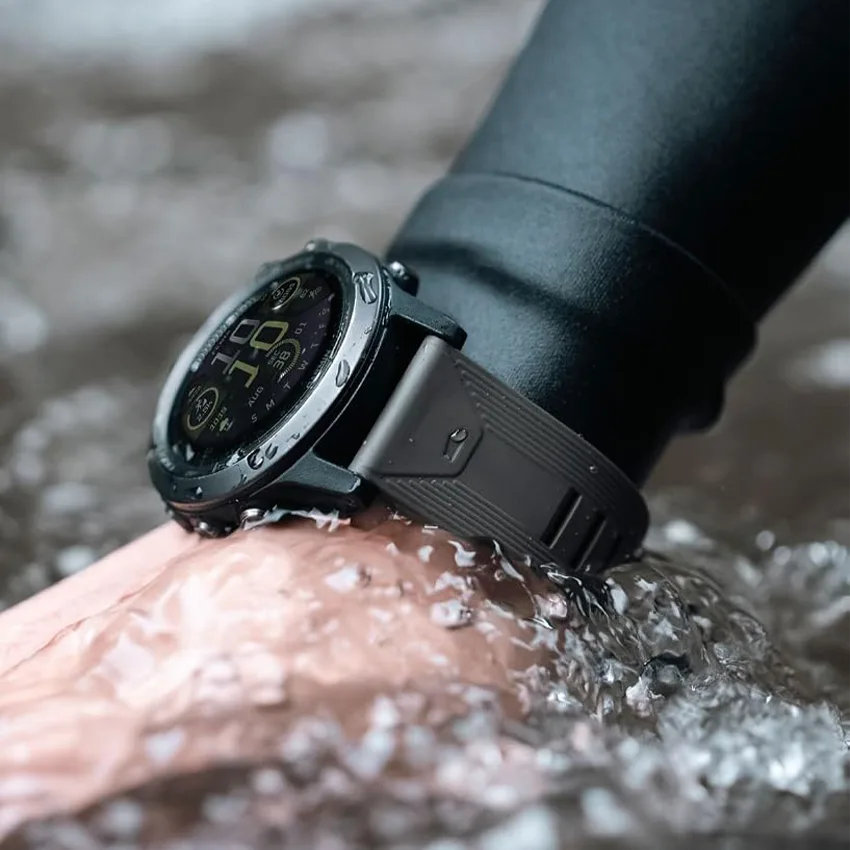
This material can often cause less irritation because FKM is designed to be low-friction and moisture-shedding, so while it’s not more breathable than silicone, it sheds sweat instead of holding it against your skin.
FKM Rubber vs Silicone for Garmin Comfort
Overall, DuraFlex FKM rubber is completely different from silicone. It has a smoother surface texture and stronger resistance to UV exposure, sweat, sunscreen, and chemicals like chlorine.
Those differences become noticeable during long workouts and all-day wear. FKM usually stays cleaner between washes, attracts less lint, and creates less friction over an extended session.
FKM and silicone are both naturally skin-friendly materials. So while silicone is more likely to create those conditions, most Garmin strap irritation comes from sweat buildup and rubbing against the skin, not from the material itself.
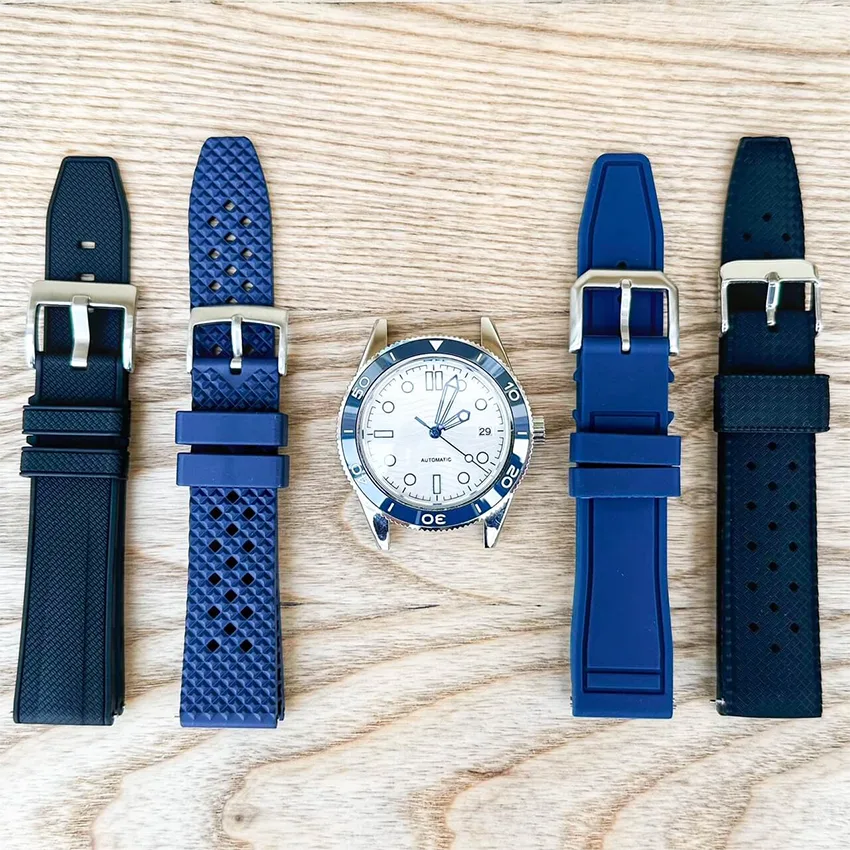
To avoid irritation, clean your rubber watch straps using a mild soap, warm water, and a soft cloth or brush. Rinse thoroughly, then ensure the strap and your wrist are completely dry before putting it back on.
| Property | FKM Rubber | Silicone |
|---|---|---|
| Comfort | Firmer out of the box | Soft and comfortable right away |
| UV resistance | Higher | Lower; color and texture wear faster |
| Pool/sunscreen resistance | Handles chlorinated water and sunscreen well | Can break down faster with repeated chemical exposure |
| Dust and lint attraction | Lower | Higher |
| Price point | Higher | Lower |
| Best use case | Daily training, outdoor activity | Casual wear, lower-sweat use |
Nylon Garmin Watch Straps
If you’re prone to wrist irritation, a nylon watch band is a practical choice. It’s the only genuinely breathable option for your workouts and should be your go-to when heat and sweat are your main complaints.
It works especially well during summer training, desk work, and overnight sleep tracking. The reduced contact surface creates less wrist pressure during long wear sessions, and the woven material flexes more naturally as your wrist moves overnight.
The downside is moisture absorption. Nylon holds water instead of shedding it, so it is less practical for swimming, heavy rain exposure, or multi-day wet conditions.
Why Nylon Feels More Breathable
The difference comes down to structure. Nylon feels more breathable than solid rubber because the woven material allows more airflow against the skin instead of sealing the entire underside of the wrist.
That extra airflow reduces sweat buildup, trapped heat, and the sticky feeling solid rubber straps can create during long workouts or hot-weather wear.
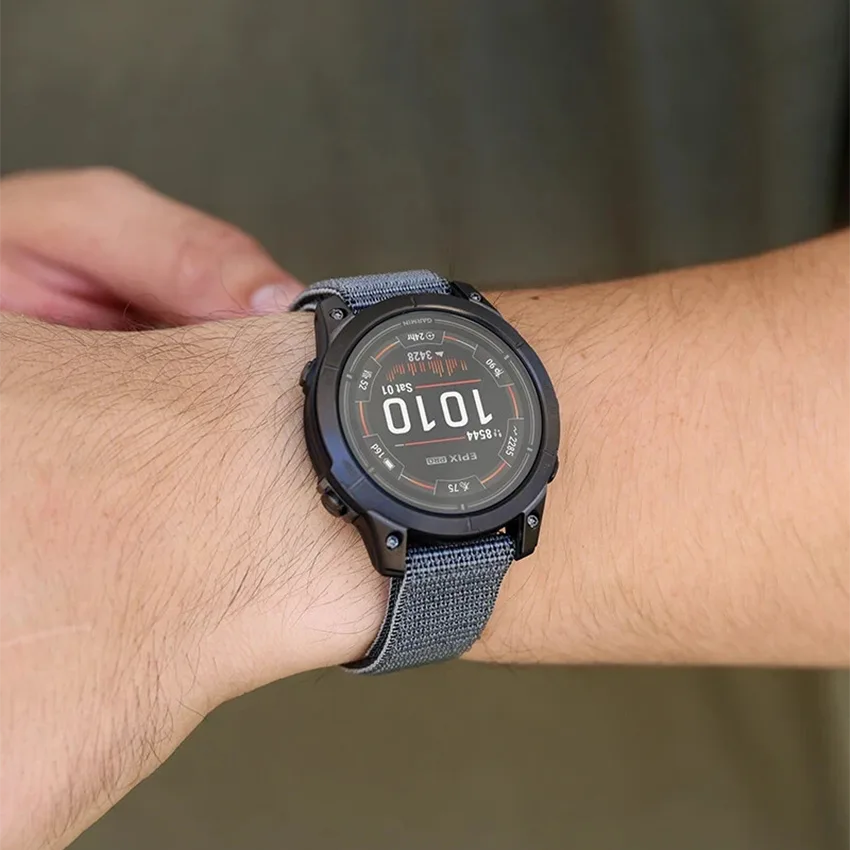
That airflow advantage is why runners in hotter climates often prefer nylon for long runs and everyday wear.
Best Activities for Nylon
Nylon shines for activities where breathability and lightweight comfort matter most.
Many Garmin owners prefer nylon for trail running, cycling, gym sessions, office wear, and overnight sleep tracking because it feels lighter during long wear.
The biggest trade-off is moisture retention. Nylon absorbs sweat and water more easily than FKM or silicone, so it is less ideal for pool swimming, open-water swimming, and long exposure to rain or wet conditions, where faster drying becomes more important.
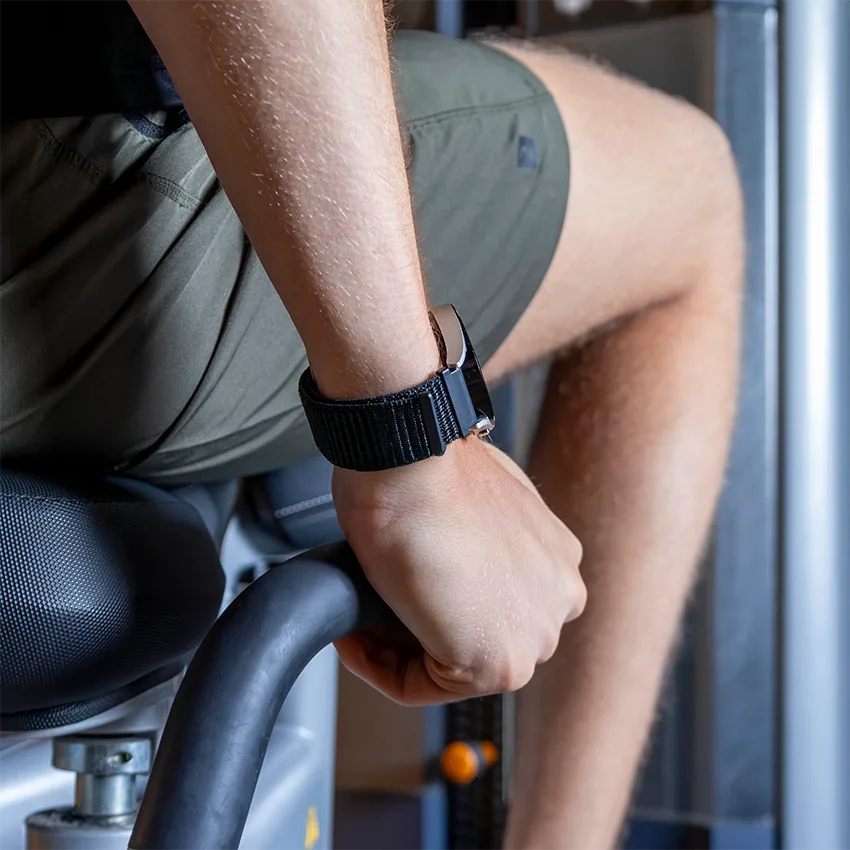
Once soaked, nylon takes longer to dry and can start holding odor if it stays damp repeatedly. If that happens, rinse it in lukewarm water with a little mild soap, gently work it through the weave, and let it air dry fully away from direct heat before you put it back on. When the weave begins fraying around the keeper loop or edges, it’s time to replace the strap.
Choosing the Right Garmin Strap Material by Activity
The chart below breaks down which material works best for different activities:
| Activity | Best Material | Why |
|---|---|---|
| Daily running / heavy sweat | FKM rubber | Lower friction and stronger resistance to sweat, UV, and chemicals |
| Hot weather / sleep tracking | Nylon | Maximum breathability with lower wrist pressure |
| Casual wear, low sweat | Silicone or FKM | Both work well; silicone costs less |
| Open-water or pool swimming | FKM rubber | Nylon absorbs water and silicone degrades faster in chlorine |
| Ultramarathons / long events | FKM with correct length | Proper keeper loop fit matters as much as material |
Strap Fit Still Matters
Even the best strap material won’t feel comfortable if the fit is wrong. A band that’s too tight increases friction, traps sweat, and creates pressure points regardless of material.
At rest, your Garmin watch band (fit guide) should sit roughly one finger-width loose. During workouts, one notch tighter is usually enough for accurate sensor readings without excessive pressure.
Pay close attention to the keeper loop area during workouts and long wear sessions.
If the keeper loop leaves deep marks or digs into the wrist during activity, try a different strap length before switching materials entirely.
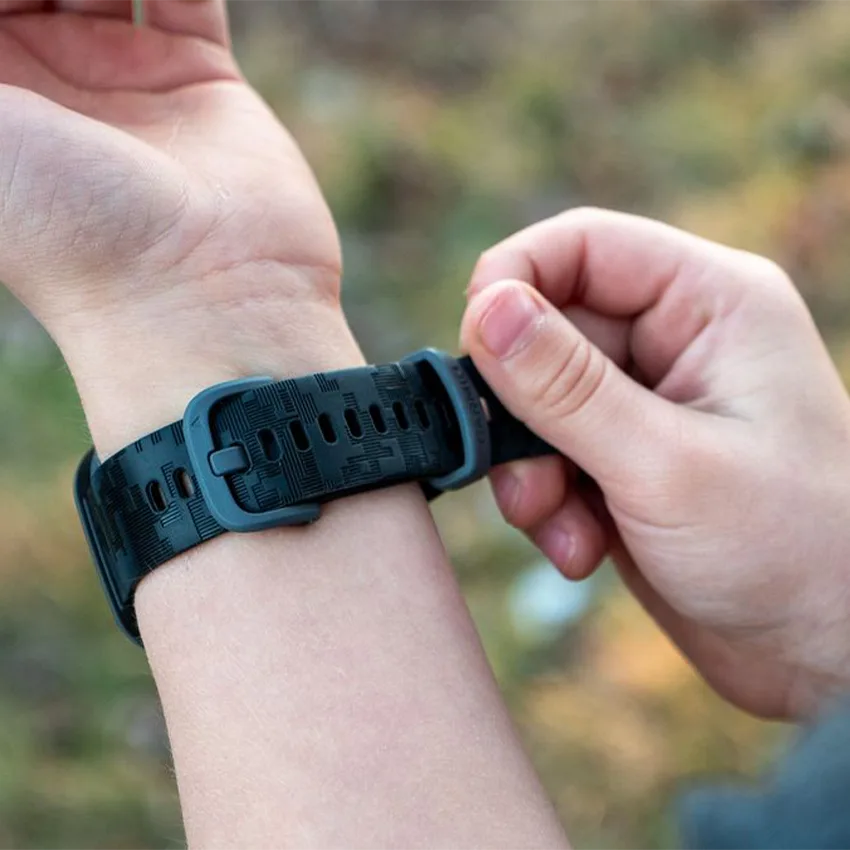
Short, standard, and long length options exist for a reason, especially for runners and athletes who wear the watch all day.
Matching the Material to How You Wear It
Comfort mostly comes down to matching the material to how you actually wear the watch.
Silicone is the default option for casual workouts. It’s comfortable and affordable.
StrapsCo’s DuraFlex FKM stays cleaner during intense workouts and attracts less dust and lint than standard silicone.
For everyday wear and sleep tracking, woven nylon usually breathes better than solid rubber straps.
Once you know what material you’re looking for, it’s easy to find the right size strap for your model. Browse all Garmin watch bands by material and filter by your model to find the right fit.
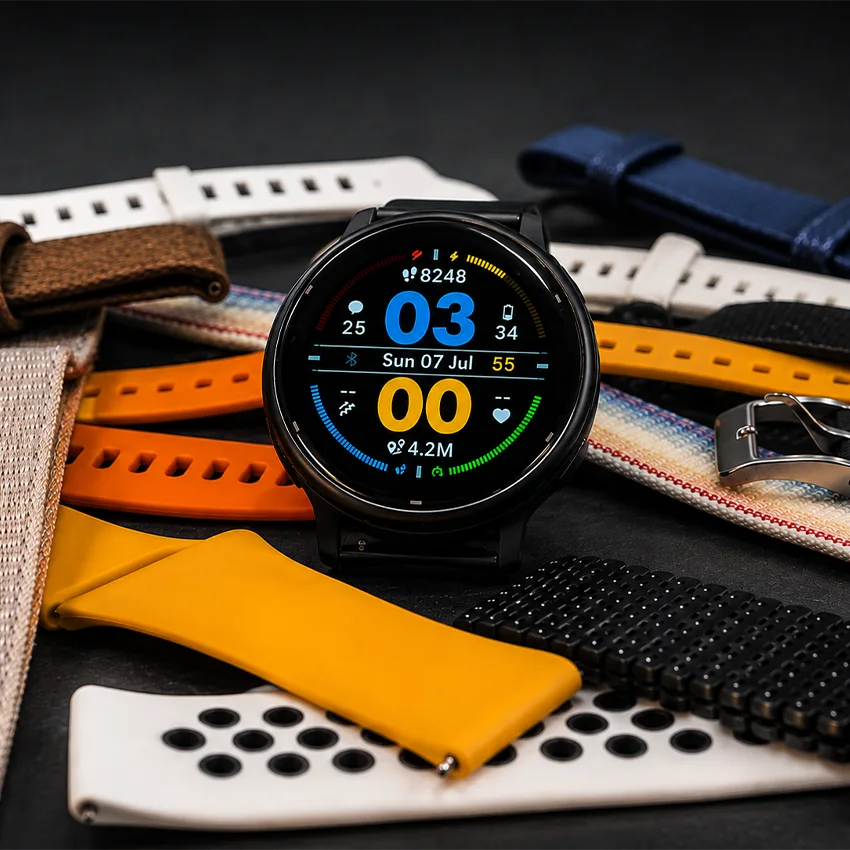
The best material is simply the one that matches how you train. Which Garmin do you wear, and how does your current strap hold up on your longest days? Tell us in the comments.
FAQs
Can a Garmin strap cause irritation even if I clean it regularly?
Yes. Cleaning removes sweat and bacteria buildup, but it doesn’t change how the material handles airflow and moisture. If your silicone strap traps moisture regularly, it can still cause irritation.
If irritation continues, the issue is usually strap fit, trapped moisture, or prolonged friction around the keeper loop.
Is rubber safe for sensitive skin?
Yes. FKM and silicone are both naturally skin-friendly materials and are generally well-tolerated during daily wear.
Most Garmin strap discomfort comes from trapped sweat and friction rather than the material itself.
If you already have a known rubber sensitivity or skin condition, speak with a dermatologist before switching materials.
How often should you replace a Garmin strap?
That mostly depends on the material and how often the watch gets worn.
Daily-worn silicone straps usually start wearing down first around the pin holes and keeper loop. Once those areas begin cracking or roughening, comfort drops quickly.
FKM usually lasts longer under the same training conditions, while nylon straps should be replaced once the weave starts fraying or odor remains after washing.
For Garmin owners training daily, FKM usually ends up being the lowest-maintenance option long term.